Powering Oculomics Research with the IDHea® Workplace Screening Dataset
Experience a new standard in ophthalmic-driven insights with the new IDHea® Workplace Screening Dataset, an AI-ready, curated, and designed for systemic health breakthroughs.
Built for researchers and innovators across life sciences and healthcare, the Workplace Screening dataset advances longitudinal oculomics research to uncover connections between ophthalmic and systemic health. This resource enables robust biomarker discovery and validation of hidden health signals. Securely integrated within the platform, this dataset accelerates AI model development for predictive and precision medicine, offering unmatched speed, depth, and actionable insights.
Your next big breakthrough starts here.
What makes the Workplace Screening Dataset Powerful for oculomics research?
Here’s what makes the Workplace Screening Dataset stand out:
Oculomics Engine
Instantly link multimodal retinal imaging with 150+ ophthalmic and systemic clinical variables, including blood, urine and biochemical laboratory measurements as well as audiometrics, anthropometrics, metabolics, vitals, medical history and expert, clinical lifestyle recommendations and demographics. Explore connections across multiple health domains, all in one place.
Longitudinal Depth
Track annual health trends and predictive signals with six+ years of follow-up data on 17.7K subjects, with ongoing collection. Explore how ophthalmic and systemic health relationships evolve over time.
Data Intelligence Platform
Analyze, iterate, and accelerate insights in a secure, cloud-native environment built for AI-driven research. Access AI-ready data enriched with high quality expert and AI-generated labels - including RETFound - to develop predictive models, validate biomarkers, and explore clinical trial hypotheses, all in a flexible sandbox designed to remove technical barriers and delays.
Relevance for Your Organization
For Academia
Develop and refine AI-driven diagnostic and monitoring tools using multimodal retinal imaging and systemic data.
Drive large-scale, reproducible studies with diverse, longitudinal real-world data for biomarker discovery and epidemiological breakthroughs.
For Pharma
Accelerate biomarker validation for drug development and clinical trials.
Harness labeled AI-ready data to strengthen translational research.
Track disease progression and treatment outcomes with robust, longitudinal follow-up.
For MedTech
Integrate seamlessly into clinical workflows with governed, cloud-based access.
Advance clinical decision-making with real-world, population-scale insights.
Why the Workplace Screening Dataset Sets a New Oculomics Standard
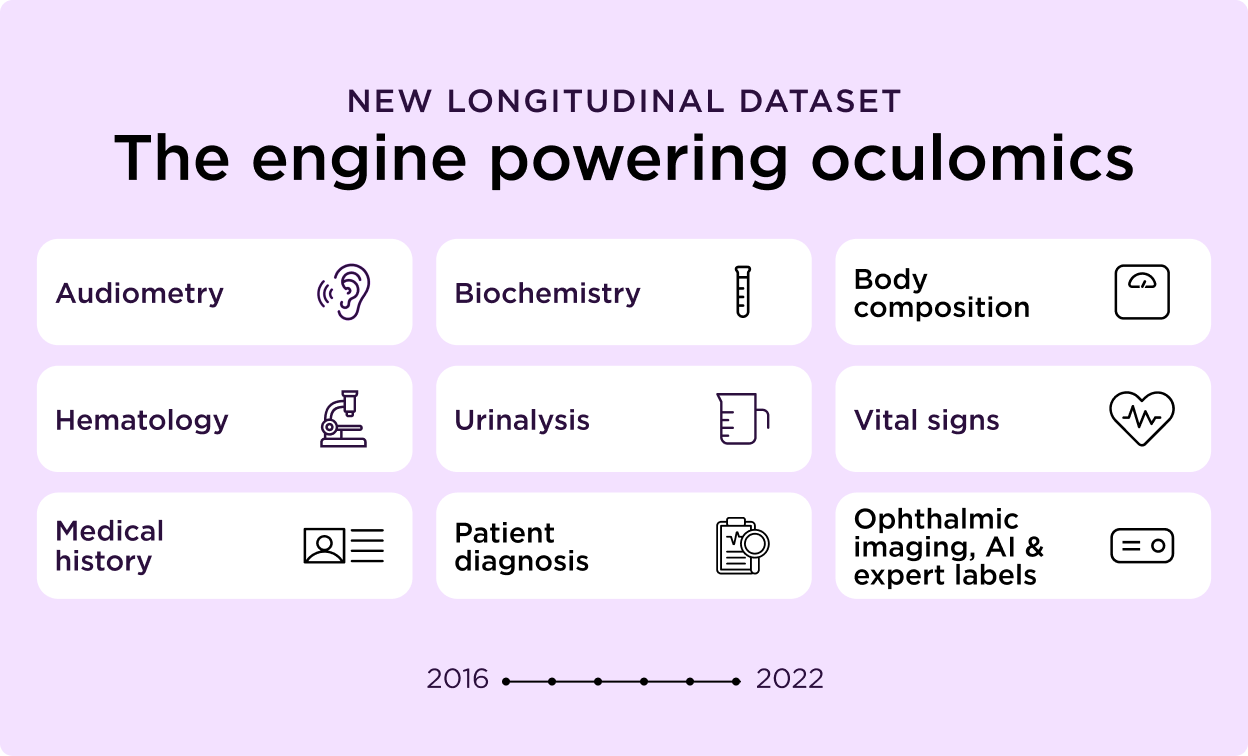
Built for scale, diversity, and depth, this dataset combines multimodal retinal imaging with rich systemic health data, something traditional ophthalmic datasets can’t match.
Our Workplace Screening dataset delivers comprehensive, research-ready data with robust completeness across clinical categories, ensuring immediate applicability and confident analysis for your research needs.
Table 1: Composition of Data Availability by Clinical Category
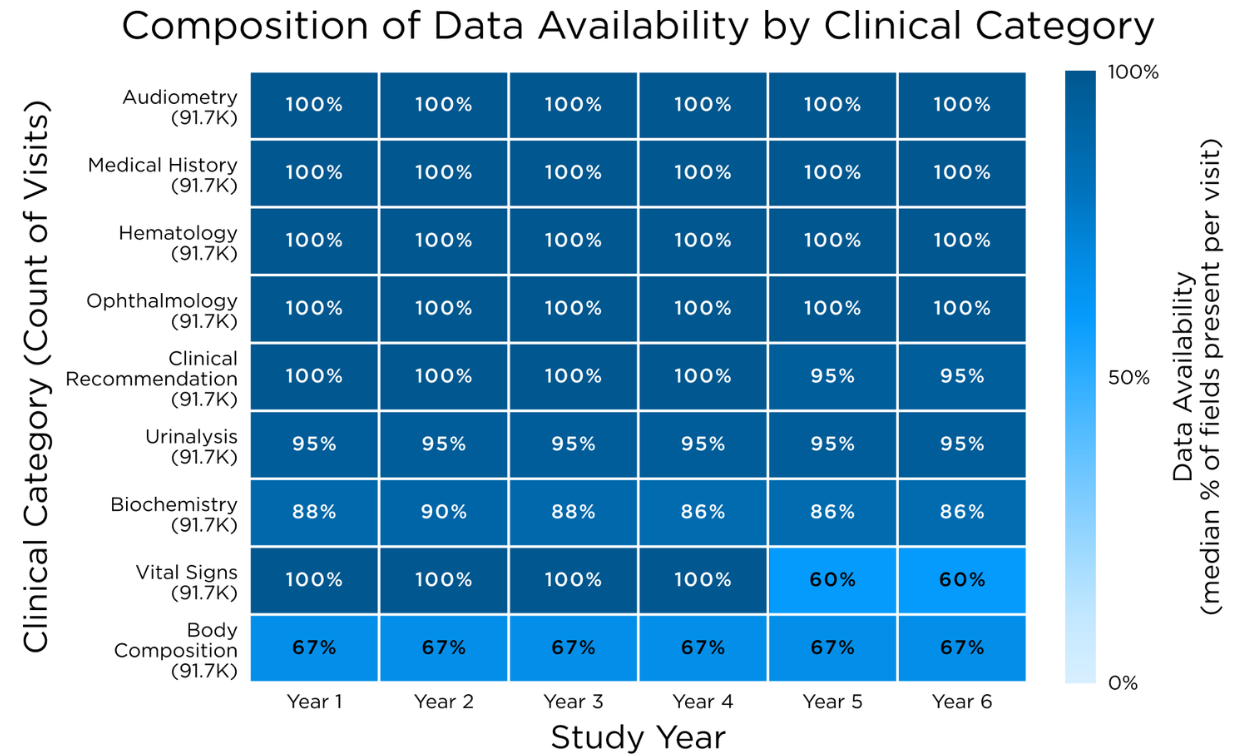
Data completeness is 100% across most clinical categories. The few categories below 100% reflect known and expected gaps: Body Composition includes CT‑derived abdominal fat measures, which are collected only for participants with abdominal CT imaging; and Vital Signs completeness declined after spirometer measurements were discontinued post‑COVID.
Understanding the Dataset: Key Metrics and Insights
Explore the key elements that make this dataset a powerful engine for biomarker discovery, translational research, and precision medicine.
Table 2: Key Dataset Metrics & Descriptions*
* See dataset documentation for full definitions and metric/variable lists
Use Cases & Value, Unlocking Research Possibilities
From early detection to predictive modeling, the Workplace Screening Dataset enables applications that drive innovation:
Translational Biomarker Discovery and Validation:
Validate retinal biomarkers for prediction and early intervention using multimodal data and longitudinal follow-up, accelerating the development of clinical tools that integrate visual and systemic signals.
Early Risk Screening:
Detect systemic health risks sooner by analyzing retinal images alongside biochemistry, hematology, and lifestyle data, then track subtle changes over time to support proactive care.
Risk Stratification & Trajectory Modeling:
Model individual risk profiles and health trajectories by combining retinal imaging with systemic biomarkers and lifestyle data, enabling targeted interventions for high-risk groups
These use cases represent just a glimpse of what’s possible, empowering researchers and clinicians to advance early intervention, personalized care, and population health strategies.
Participant Retention & Diagnostic Diversity: Longitudinal Insights
Six years of follow-up on 17.7K participants have contributed to a dataset designed to reveal health trends and power predictive science. Exceptional participant retention and diagnostic diversity make this dataset a trusted foundation for longitudinal research, supporting studies on disease prevalence, progression, and emerging health trends.
Retention That Builds Confidence
The largest wave of participants joined in Year 1, a typical trend for longitudinal studies. Consistent engagement across subsequent years ensures reliable, real-world data for predictive modeling.
Diagnostic Diversity That Drives Discovery
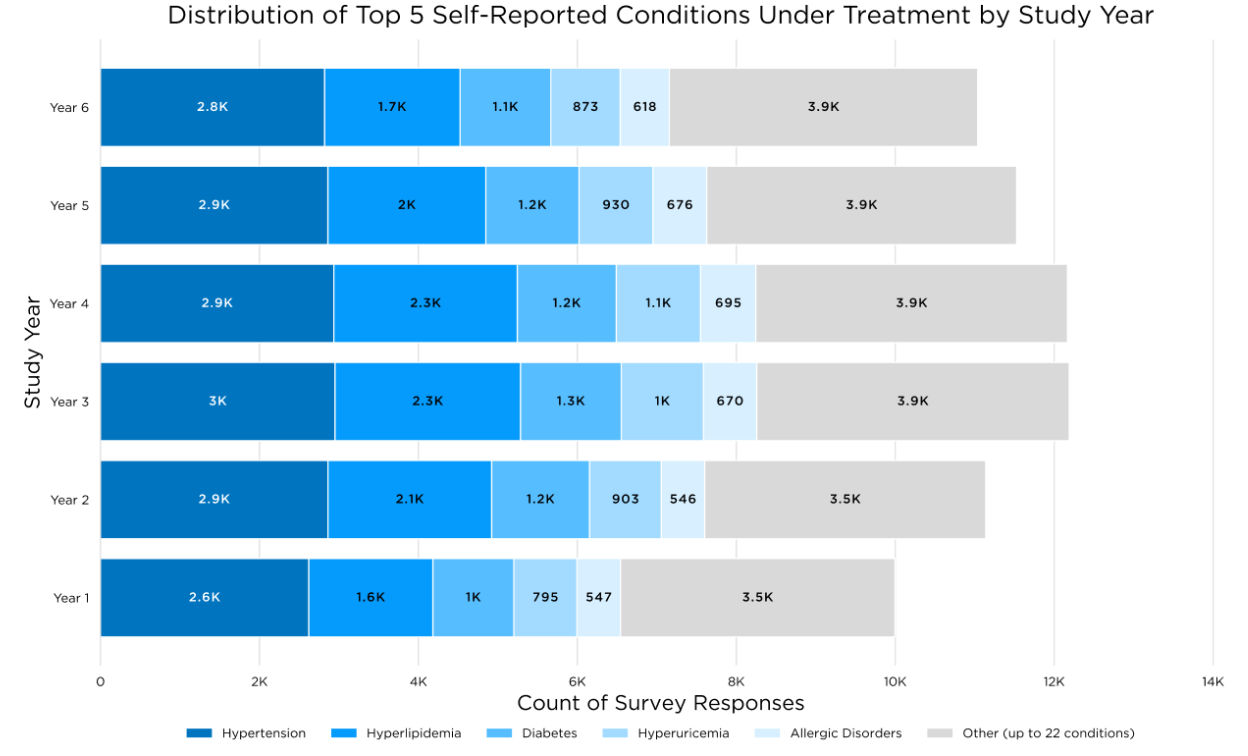
27 systemic conditions tracked over six years provide unmatched breadth. Annual counts reveal how conditions evolve, delivering a rich, longitudinal view essential for translational research.
Accelerate Your Impact in Oculomics Today!
The Workplace Screening Dataset is available now, with the first release including follow-up coverage from 2016 until 2022, giving researchers immediate access to a robust foundation for vision and systemic health research.
Request early access today and unlock a longitudinal dataset that fuses systemic health and ophthalmic imaging data, engineered to accelerate translational research and drive innovation in oculomics.